Your Body’s “Second Heart”: How Your Calf Muscles Keep Your Blood Flowing
You’ve probably heard the heart described as the body’s hardest-working muscle. But did you know you have a powerful helper often called the “second heart”?
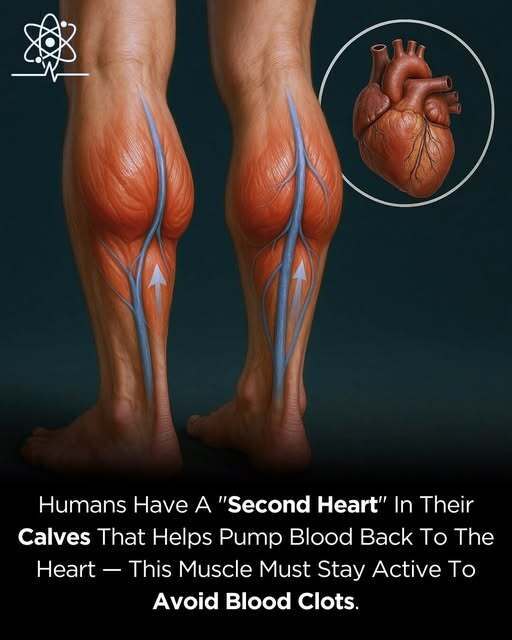
It’s not another organ in your chest — it’s the calf muscles in your lower legs, especially the soleus (the deeper, flatter muscle) and the gastrocnemius (the more visible one that gives your calves their shape).
How the “Second Heart” Actually Works
Your heart pumps oxygen-rich blood down to your legs and feet. Once the oxygen is delivered, deoxygenated blood needs to travel back up to the heart and lungs — all while fighting gravity.
That’s where your calves step in.
Every time you contract your calf muscles (even with small ankle movements or steps):
- The muscles squeeze the deep veins in your lower legs.
- This action pushes blood upward.
- Tiny one-way valves inside the veins prevent the blood from flowing backward.
This mechanism is known as the calf muscle pump (or peripheral venous pump). It acts like a natural booster, helping your heart do its job more efficiently and reducing the workload on your cardiovascular system.
Without this pump working well, blood can pool in the lower legs, increasing vein pressure and making circulation more difficult.
Why This Matters More Than You Might Think
When you sit or stand still for extended periods — such as during desk work, long flights, road trips, or recovery after surgery — the “second heart” becomes less active. This can contribute to:
- Swelling and heaviness in the legs
- Varicose veins
- Chronic venous insufficiency
- Deep vein thrombosis (DVT) — blood clots that can form in the legs and potentially travel to the lungs
Supporting your calf muscle pump helps maintain better venous return, eases the burden on your heart, and may lower the risk of common circulatory issues.
Easy Ways to Support Your Calf Muscle Pump
You don’t need intense activity to keep this system working. Simple, low-effort movements can help:
- Ankle pumps — While seated, flex your feet up and down (point your toes away, then pull them toward your shins) 10–20 times. Repeat several times throughout the day.
- Seated calf raises — While sitting, lift your heels off the floor (keeping toes on the ground), hold briefly, then lower. Start with 10–15 reps.
- Ankle circles — Rotate your ankles slowly in both directions.
Walk regularly — even short, gentle strolls throughout your day can activate the calf pump and support healthy blood flow.
Tie-In to Frequent Squats for Better Blood Flow
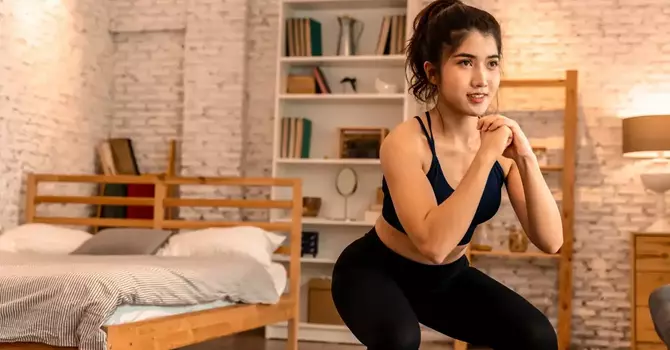
If you read my earlier post on optimizing blood health, you’ll remember how frequent squats (or bodyweight squat variations) are excellent for circulation. Squats engage the large muscles of the legs, including the calves, and create a natural pumping action that helps move blood upward. Doing a few squats periodically throughout the day complements the calf muscle pump beautifully and adds an extra boost to venous return without requiring long workouts.
The Japanese Walking Hack: A Simple Upgrade for Circulation
Another easy and science-backed way to activate your “second heart” is the Japanese walking method (also called Interval Walking Training).
This technique involves alternating between 3 minutes of brisk walking (faster, purposeful pace where you feel slightly breathless) and 3 minutes of slow, relaxed walking. Repeat the cycle for about 30 minutes.
Research from Japanese studies shows this simple interval approach can:
- Improve leg muscle strength (including calves)
- Enhance overall circulation and venous return
- Support better blood pressure and cardiovascular health
- Deliver more benefits than steady-paced walking in the same amount of time
It’s low-impact, requires no equipment, and turns an ordinary walk into a more effective session for your calf pump and blood flow. If you enjoy walking, this is a gentle “hack” worth trying a few times a week.
Foam Rolling: Self-Massage for Healthier Calves
Another effective way to care for your calves is foam rolling — a simple form of self-myofascial release that acts like a deep tissue massage.
Rolling your calves can:
- Release muscle tightness and tension
- Improve local blood flow and circulation (including supporting venous return)
- Enhance flexibility and ankle mobility
- Help reduce soreness and promote overall leg comfort
How to do it safely: Sit on the floor with your legs extended. Place a foam roller under one calf. Use your arms to lift your hips slightly and slowly roll up and down the length of the calf muscle. Spend 30–60 seconds per leg, focusing on tender spots. Breathe deeply and avoid rolling directly over bones or joints. Do this a few times per week, or as needed after long periods of sitting.
A Note on Sun Exposure for Your Feet
Getting a small amount of safe sunlight on your feet and lower legs can offer additional benefits. Brief sun exposure helps your skin produce vitamin D, which supports bone health, muscle function, and overall well-being — all of which can play a role in keeping your circulatory system strong.
Some research also suggests sunlight may help the body release nitric oxide, which can support healthy blood flow and blood pressure regulation.
Important safety tips:
- Aim for just 10–15 minutes of midday sun on your feet/lower legs a few times a week (depending on your skin type and location).
- Always protect your skin with sunscreen if you’ll be out longer, and avoid peak burning hours.
- Consult your doctor if you have skin concerns or conditions that affect sun sensitivity.
Final Thought
Your heart may be the star of the show, but your calves are the unsung heroes working behind the scenes to keep blood moving against gravity. By combining simple ankle movements, occasional squats, the Japanese walking hack, foam rolling, and mindful sun exposure, you can give your “second heart” the support it needs.
Treat your calves with a little care, and they’ll help support better circulation and overall comfort for years to come.